
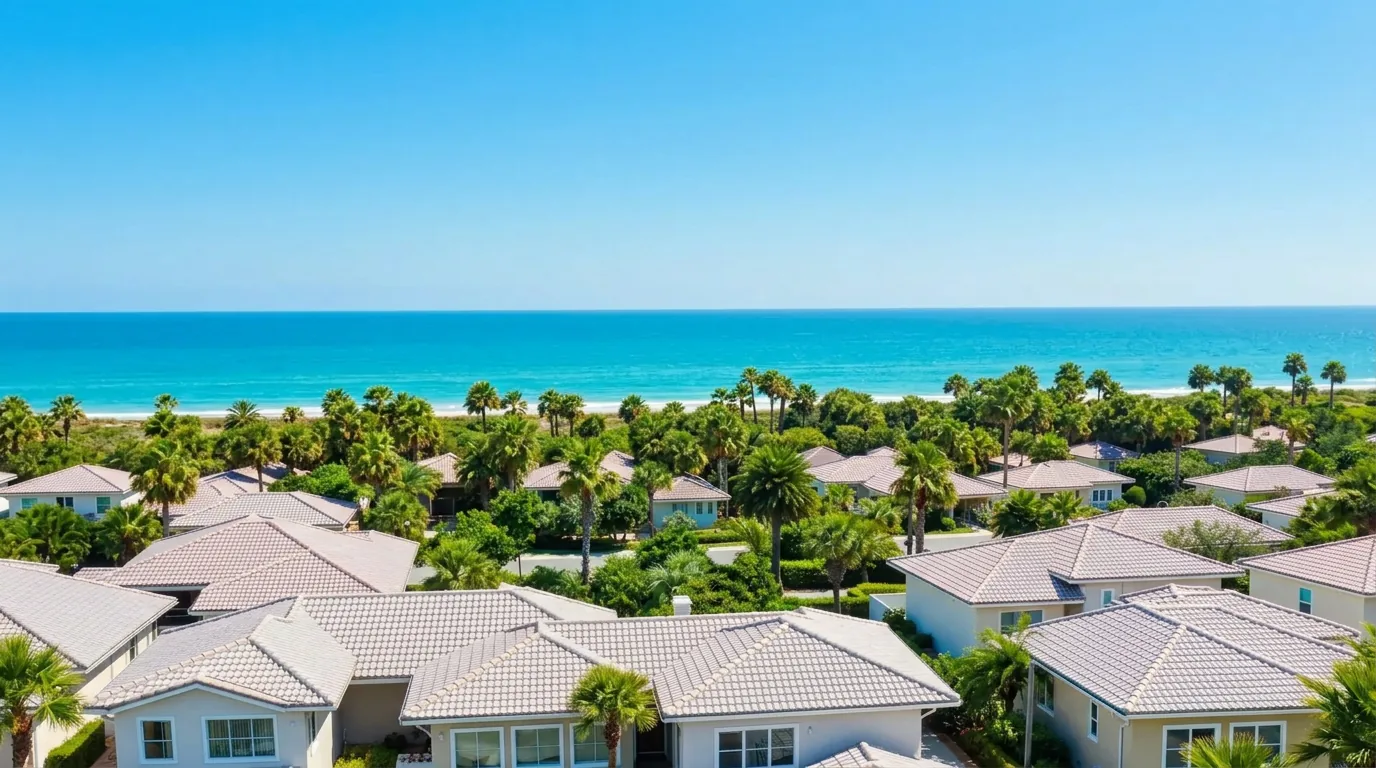
Buying on the Treasure Coast
Property Taxes, Homestead and Portability
How Florida property taxes work in Indian River and St. Lucie counties for resale and new homes: homestead exemption, the Save Our Homes cap, portability and the reset when a home sells.
Florida has no state income tax, and property taxes vary by address across Indian River and St. Lucie counties. Whether you buy a resale or a new home, you should understand how millage works, how the homestead exemption and Save Our Homes cap lower your bill, and why taxes reset when a home sells.
How millage works
Your tax bill is the taxable value of your home times the combined millage rate (1 mill = $1 of tax per $1,000 of taxable value). Rates differ by city and taxing district and are set every year. Look up the exact address with the Indian River County Property Appraiser (ircpa.org) or the St. Lucie County Property Appraiser (paslc.gov).
Homestead exemption
Florida residents who occupy their home as a primary residence by January 1 receive a $50,000 homestead exemption ($25,000 applies to all taxes; the second $25,000 applies to non-school taxes). File with the county property appraiser by March 1.
Save Our Homes cap
Once homesteaded, your assessed value can rise no more than 3% per year (or CPI, whichever is lower) regardless of market value. New homestead applies the cap on the second year, your first full tax year is based on the just/market value at January 1.
Homestead portability, transfer your Save Our Homes savings
If you already own a homesteaded Florida property and you're moving within Florida, portability lets you carry the gap between your old home's just (market) value and its capped assessed value over to your next homestead, up to $500,000 of benefit.
The window: you must establish the new homestead within three tax years of abandoning the prior one (the statute counts tax years, not calendar years, so plan the January 1 ownership and occupancy date carefully).
Upsizing (new home worth more than the old): you transfer the full Save Our Homes differential dollar-for-dollar, capped at $500,000.
Downsizing (new home worth less than or equal to the old): you transfer a proportional share, calculated as new just value × (old assessed value ÷ old just value).
Split households: spouses who previously shared a homestead can split the benefit when establishing separate homesteads, each claiming up to $500,000.
How to file: submit Form DR-501T ("Transfer of Homestead Assessment Difference") alongside your standard DR-501 homestead application with the new county's property appraiser by March 1. Out-of-state moves do not qualify, portability is Florida-to-Florida only.
Buying a resale: the assessment resets
When a home sells, its assessed value resets to market value on the next January 1. The seller's capped Save Our Homes value does not transfer to you, so your bill can be noticeably higher than theirs. Budget using an estimate for the purchase price, not the seller's current tax bill.
New construction: why the first tax bill can shock
Builders often quote taxes based on the LOT-only assessment. Once your home is built and assessed, your tax bill can triple year-two. Always budget using the post-construction estimate from the property appraiser, not the builder's pro-forma.
Frequently Asked Questions
Which county has lower property taxes, Indian River or St. Lucie?
It depends on the exact address, city and taxing districts, and rates change yearly. Check the specific property on the county Property Appraiser site before you buy.
Can I transfer my homestead from another Florida county?
Yes, Florida's portability rule lets you carry up to $500,000 of your Save Our Homes savings to a new homestead anywhere in Florida. You have three tax years from abandoning your prior homestead to establish the new one, and you file Form DR-501T alongside your standard homestead application by March 1.
Does portability help if I'm moving from out of state?
No, portability only applies to Florida-to-Florida moves. Buyers relocating from another state start fresh with a new $50,000 homestead exemption and a new Save Our Homes baseline once they establish Florida residency and file by March 1.
How does the Save Our Homes 3% cap work in Vero Beach and Indian River County?
Once you establish homestead on a Vero Beach or Indian River County property, your assessed value can rise no more than 3% per year (or CPI, whichever is lower), even if market values jump. The cap kicks in your second tax year, your first full year is assessed at January 1 just/market value.
How much homestead portability can I bring to a new Vero Beach home?
Up to $500,000 of Save Our Homes savings if you're upsizing from another Florida homestead. File Form DR-501T with the Indian River County Property Appraiser by March 1 of the year after you establish residency, alongside your standard DR-501 homestead application.
Why is my first property tax bill on a new construction home so much higher than the builder estimated?
Builders typically quote taxes based on the lot-only assessment from before the home was built. Once the finished home is on the tax roll the following January 1, your assessed value (and bill) often doubles or triples. Always budget using the property appraiser's post-construction estimate, not the builder's pro-forma.
Keep researching
Want a personalized walk-through?
Talk with Pete & Kate about how this applies to your move, whether you are buying, selling, or building new.
Talk to a Local Expert
Have Questions About New Construction?
Get personalized guidance on buying a new construction home anywhere on the Treasure Coast, from a local expert.